CBD Hash: What It Is, How It's Made and How It Differs from THC Hash
CBD hash has become one of the fastest-growing hemp products in recent years. Although it looks almost identical to traditional cannabis hash, its chemical profile, legal status and effects are very different.
Its sticky texture, rich aroma and resinous appearance often surprise people trying it for the first time. Many assume it contains THC because it smells exactly like traditional hash. In reality, the characteristic cannabis aroma comes primarily from terpenes, not from THC itself.
Modern CBD hash is produced from specially bred hemp varieties that are naturally rich in cannabidiol (CBD) while remaining compliant with legal THC limits in many countries.
The result is a concentrated cannabis resin that preserves much of the plant's natural terpene profile without producing the intoxicating effects commonly associated with high-THC cannabis.
In this guide, you'll learn:
- What CBD hash actually is
- How it's produced
- Why it smells like traditional hash
- The most common extraction methods
- The world's leading CBD hash producers
- How to identify premium-quality CBD hash
- Common myths surrounding CBD hash
Whether you're completely new to CBD or simply want to understand how hash is made, this guide covers everything you need to know.
What Is CBD Hash?
CBD hash (also called CBD hashish) is a concentrated cannabis resin produced by collecting and compressing the trichomes from CBD-rich hemp flowers.
Unlike CBD oils or isolates, hash remains much closer to the plant's natural composition because it contains not only cannabinoids but also terpenes, flavonoids and other naturally occurring compounds.
To understand what CBD hash really is, it's important to understand trichomes.
What Are Trichomes?
Trichomes are microscopic resin glands that cover cannabis flowers.
Under magnification they resemble tiny crystal mushrooms coating the surface of each bud.
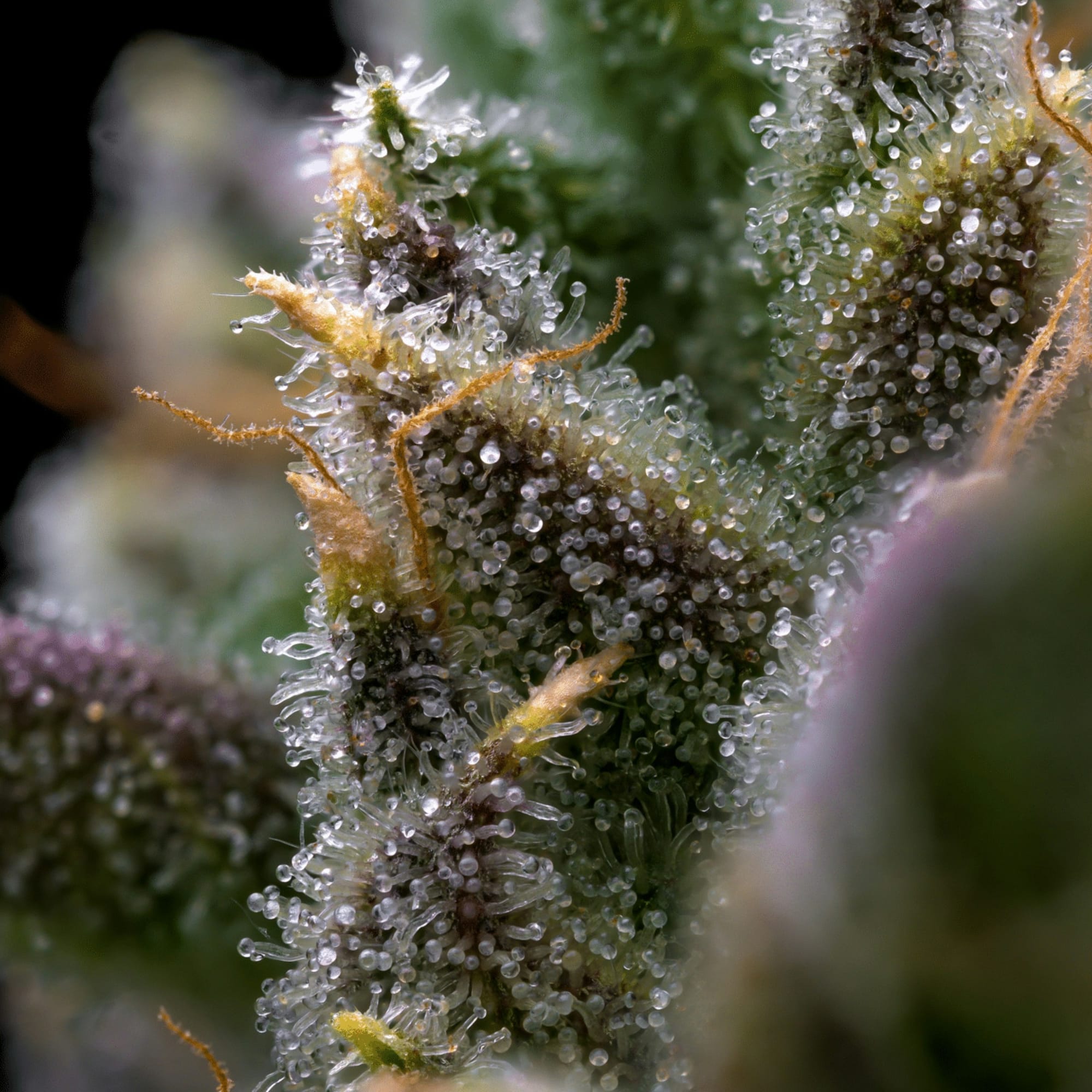
These glands are where the plant produces most of its valuable compounds, including:
- CBD
- THC
- CBG
- CBC
- Terpenes
- Flavonoids
In other words, trichomes are the plant's natural chemical factories.
Hash is simply a concentrated collection of these resin glands.
This means that CBD hash and traditional THC hash are manufactured using essentially the same process.
The only significant difference lies in the genetics of the plant used to produce them.
CBD hash is genuine cannabis hash. The manufacturing process is virtually identical to traditional hash; what changes is the cannabinoid profile of the hemp variety used.
Why Does Cannabis Produce Trichomes?
Trichomes are not produced for human consumption.
They evolved as a sophisticated defense mechanism that helps cannabis survive in nature.
Researchers believe trichomes help protect the plant by:
- reducing UV radiation damage;
- limiting water loss;
- deterring insects and herbivores;
- protecting developing flowers;
- reducing microbial infections.
Because trichomes play such an important protective role, healthy plants grown under optimal conditions generally produce more resin than stressed plants.
This is one of the reasons why cultivation practices have such a significant impact on the final quality of CBD hash.
Does CBD Hash Get You High?
Simply put: No.
CBD is non-intoxicating.
Although CBD and THC are both cannabinoids naturally found in Cannabis sativa, they interact with the body's endocannabinoid system in very different ways.
THC strongly binds to CB1 receptors located throughout the brain and central nervous system, producing the psychoactive effects commonly associated with cannabis.
CBD behaves differently.
Rather than strongly activating CB1 receptors, CBD interacts indirectly with multiple biological pathways, including serotonin receptors (5-HT1A), TRPV1 receptors and several signalling systems involved in maintaining homeostasis.
Because of these differences, CBD hash does not produce the euphoric "high" associated with THC-rich cannabis.
Some users report feelings of relaxation or general well-being after using CBD products, although individual experiences vary and scientific research in this area is still evolving.
Why Does CBD Hash Smell Like Traditional Hash?
This is probably the question most people ask after smelling CBD hash for the first time.
The answer is simple:
Terpenes.
Terpenes are aromatic molecules naturally produced by cannabis and hundreds of other plant species.
They are responsible for the distinctive aromas found in:
- lemons;
- pine trees;
- lavender;
- black pepper;
- rosemary;
- mangoes;
- hops.
Importantly, terpenes are not THC.
A CBD-rich hemp variety can produce virtually the same terpene profile as a THC-rich cannabis variety.
That's why premium CBD hash often smells almost identical to traditional hashish.
The Most Common Terpenes Found in CBD Hash
| Terpene | Typical Aroma | Also Found In |
|---|---|---|
| Myrcene | Earthy, herbal | Mango, thyme |
| Limonene | Citrus | Lemons, oranges |
| Pinene | Pine forest | Pine needles, rosemary |
| Caryophyllene | Peppery, spicy | Black pepper |
| Linalool | Floral | Lavender |
The terpene profile is one of the biggest factors influencing the flavour, aroma and overall quality of CBD hash.
How Is CBD Hash Made?
Although production techniques have improved significantly over the past few decades, the basic principle has remained unchanged for centuries:
Separate the trichomes from the plant material and compress them into resin.
Everything begins long before extraction.
1. Hemp Genetics
Not every hemp variety produces high-quality hash.
Breeders specifically select cultivars capable of producing:
- abundant resin;
- high CBD concentrations;
- rich terpene profiles;
- legally compliant THC levels.
Modern breeding programs have dramatically improved resin production compared with hemp grown only a decade ago.
2. Cultivation
High-quality CBD hash starts with high-quality flowers.
Growing conditions—including light intensity, temperature, nutrition and overall plant health—directly influence trichome production.
Healthy flowers covered in resin produce far superior hash than poorly cultivated plants.
For this reason, many premium producers grow hemp indoors or in carefully controlled greenhouse environments.
3. Harvest
Harvest timing is critical.
Harvest too early and resin production has not fully developed.
Harvest too late and cannabinoids and terpenes begin degrading.
Experienced cultivators monitor trichome maturity carefully to determine the ideal harvesting window.
4. Drying and Curing
Freshly harvested flowers are slowly dried before undergoing a curing process.
Proper curing stabilizes moisture levels while allowing terpene profiles to mature and develop.
This stage has a profound impact on the final aroma, texture and overall quality of CBD hash.
Some premium producers cure flowers for several weeks before beginning the extraction process, helping preserve the plant's natural complexity.
CBD Hash Extraction Methods
Once hemp flowers have been properly dried and cured, the next step is extracting the resin. The goal is simple: separate the trichomes from the rest of the plant material while preserving as many cannabinoids and terpenes as possible.
The cleaner the extraction, the higher the quality of the final CBD hash.
Today, most premium manufacturers rely on mechanical extraction methods that avoid chemical solvents and preserve the plant's natural profile.
Dry Sift: The Traditional Hash-Making Method
Dry Sift is one of the oldest and most respected techniques used to produce hash.
The process involves gently rubbing or shaking dried hemp flowers over a series of fine mesh screens. As the flowers move across the screens, the brittle trichomes break away and fall through the mesh, while larger pieces of plant material remain behind.
The resulting powder is known as kief. This golden resin is then carefully collected and compressed into blocks or balls of hash.
Because no water or solvents are used, Dry Sift preserves the flower's natural terpene profile exceptionally well.
Advantages of Dry Sift
- Traditional solventless extraction.
- Excellent terpene preservation.
- Rich aroma and flavor.
- Minimal processing.
- Highly valued by artisan producers.
Drawbacks
- Lower yields compared to some modern extraction techniques.
- Requires premium-quality flowers.
- The purity depends heavily on the skill of the producer and the quality of the screening process.
Ice Water Hash (Bubble Hash)
Ice Water Hash, often called Bubble Hash, uses ice-cold water to separate trichomes from hemp flowers.
Low temperatures make the resin glands brittle, allowing them to detach without damaging their structure.
The mixture is then filtered through a series of specialized filter bags with different micron sizes. Each bag captures trichomes of a different size, making it possible to produce multiple grades of hash from a single extraction.
After filtration, the resin is carefully dried before being pressed into hash.
Bubble Hash is widely considered one of the cleanest solventless extraction methods available.
Why is it called Bubble Hash?
When exposed to heat, high-quality Bubble Hash tends to bubble as the resin melts. This characteristic gave the extraction method its popular name.
Static Sift
Static Sift is a modern refinement of traditional Dry Sift.
After the initial screening process, static electricity is used to remove tiny fragments of plant material that remain mixed with the resin.
The result is an exceptionally clean collection of trichomes with a very high level of purity.
Because it combines traditional techniques with modern refinement, Static Sift has become increasingly popular among premium CBD hash producers.
Hand-Rubbed Charas
Although uncommon in today's CBD market, Charas remains one of the oldest forms of hash production.
Instead of using dried flowers, fresh cannabis plants are gently rubbed between the hands until the sticky resin accumulates on the skin.
The resin is then rolled into small balls or sticks.
Charas is still traditionally produced in parts of India and Nepal, although it is rarely used for commercial CBD hash production in Europe or North America.
Rosin: A Modern Solventless Concentrate
Rosin deserves a brief mention because many people confuse it with hash.
Rosin is created by applying controlled heat and pressure to flowers or hash, forcing the resin out without the use of chemical solvents.
Although rosin is technically a cannabis concentrate rather than traditional hash, both products share the same starting material: resin-rich trichomes.
Which Extraction Method Produces the Best CBD Hash?
There is no single answer.
Each extraction technique produces slightly different characteristics.
| Method | Purity | Terpene Preservation | Texture |
|---|---|---|---|
| Dry Sift | High | Excellent | Traditional |
| Bubble Hash | Very High | Excellent | Soft to crumbly |
| Static Sift | Exceptional | Outstanding | Fine and refined |
| Charas | Moderate | High | Sticky |
| Rosin | Very High | Excellent | Sap-like |
The "best" method depends on what you value most.
Some enthusiasts prefer the classic character of Dry Sift, while others appreciate the exceptional cleanliness of Static Sift or Bubble Hash.
Why Does CBD Hash Come in Different Colors?
One of the biggest misconceptions is that darker hash is automatically better.
In reality, color depends on several factors, including:
- Hemp genetics.
- Trichome maturity.
- Oxidation during storage.
- Pressing temperature.
- Curing time.
- Extraction technique.
High-quality CBD hash may appear:
- light blonde;
- golden;
- sandy brown;
- chocolate brown;
- almost black after extended curing.
Color alone is never a reliable indicator of quality.
A much better indicator is aroma, texture and laboratory testing.
Where Is CBD Hash Produced?
Premium CBD hash is now produced across several European countries, although the quality depends more on cultivation and processing standards than on geography alone.
Switzerland
Switzerland played a major role in the development of the modern CBD industry.
Its hemp breeding programs helped create many of today's CBD-rich cultivars, and Swiss producers remain known for premium flowers and solventless hash.
Italy
Italy has a long tradition of hemp cultivation and has become one of Europe's leading producers of CBD flowers and artisanal hash.
Many Italian manufacturers specialize in Dry Sift extractions that emphasize natural terpene preservation.
France
France is one of the world's largest producers of industrial hemp.
While much of its hemp crop is grown for fiber and seed, the country also supplies raw material for a growing CBD extraction industry.
Spain
Spain has become an important hub for the European CBD market.
Thanks to its favorable climate and established cannabis expertise, many Spanish companies specialize in processing, selecting and distributing premium hemp flowers and CBD hash produced from compliant hemp varieties.
Portugal
Portugal has invested heavily in hemp cultivation and medical cannabis production over the past decade, making it another important supplier within Europe.
How to Identify Premium CBD Hash
Not all CBD hash products are created equal.
Here are the characteristics worth paying attention to before making a purchase.
Aroma
High-quality CBD hash should have a rich, complex and natural cannabis aroma.
Weak or flat aromas often indicate terpene loss during drying or storage.
Texture
Depending on the extraction method, premium hash may be:
- soft;
- creamy;
- slightly sticky;
- firm;
- crumbly.
Texture alone does not determine quality.
Laboratory Testing (COA)
One of the strongest indicators of product quality is an independent Certificate of Analysis (COA).
A reputable manufacturer should provide laboratory results confirming:
- CBD concentration.
- THC content.
- Minor cannabinoid profile.
- Absence of pesticides.
- Heavy metal testing.
- Microbiological safety.
Always choose brands that make their laboratory reports easily accessible.
Common Mistakes When Buying CBD Hash
Many first-time buyers focus on the wrong factors.
Avoid these common mistakes:
❌ Assuming higher CBD percentages always mean better quality.
❌ Choosing products based only on price.
❌ Ignoring terpene profiles.
❌ Buying hash without laboratory reports.
❌ Assuming strong aroma means high THC.
❌ Believing dark-colored hash is automatically superior.
Premium CBD hash is defined by the quality of the flower, the extraction process and the preservation of its natural resin—not simply by its cannabinoid percentage.
CBD Hash vs CBD Flower vs CBD Oil
If you're new to hemp-derived products, it's easy to confuse CBD hash with other popular forms of CBD. While they all originate from the same plant, they differ significantly in terms of processing, cannabinoid concentration and terpene preservation.
| Feature | CBD Flower | CBD Hash | CBD Oil |
|---|---|---|---|
| Source | Dried hemp flowers | Compressed trichomes (resin glands) | Hemp extract diluted in carrier oil |
| CBD Concentration | Medium | High | Medium to very high |
| Terpene Content | High | Very high | Varies depending on extraction |
| Processing | Minimal | Moderate | High |
| Appearance | Whole flower | Compressed resin | Liquid |
| Aroma | Strong | Very strong | Mild to moderate |
CBD hash is often chosen by users looking for a product that preserves the plant's natural terpene profile while offering a higher resin concentration than flower alone.
How to Store CBD Hash Properly
Like any resin-rich cannabis product, CBD hash can gradually lose aroma and quality if stored incorrectly.
The two most fragile components are terpenes and cannabinoids, both of which can degrade when exposed to heat, oxygen, light and excessive humidity.
To keep your CBD hash in the best possible condition:
- Store it in an airtight glass container.
- Keep it in a cool, dark and dry place.
- Avoid prolonged exposure to sunlight.
- Keep it away from radiators, heaters and other heat sources.
- Handle it as little as possible to preserve the trichomes.
- If storing for several months, avoid frequent temperature fluctuations.
Proper storage helps maintain the original aroma, texture and overall quality for much longer.
Common Myths About CBD Hash
As CBD products have become more popular, so have misconceptions surrounding them.
Let's separate fact from fiction.
Myth #1: CBD Hash Isn't Real Hash
False.
CBD hash is produced using the same resin glands (trichomes) as traditional hash. The difference lies in the cannabinoid profile of the hemp variety used, not in the manufacturing process.
Myth #2: Strong-Smelling CBD Hash Contains High THC
False.
The characteristic cannabis aroma comes primarily from terpenes, not THC.
A premium CBD hash can smell almost identical to traditional hash while remaining compliant with legal THC limits.
Myth #3: Dark Hash Is Always Better
False.
Color depends on genetics, curing, oxidation and pressing conditions.
Excellent-quality CBD hash can range from light blonde to dark brown.
Myth #4: More CBD Always Means Better Hash
False.
The overall quality depends on many factors, including:
- flower quality;
- terpene preservation;
- extraction method;
- resin purity;
- laboratory testing.
A balanced cannabinoid and terpene profile is often more important than CBD percentage alone.
Frequently Asked Questions
Is CBD hash legal?
CBD hash is regulated differently around the world.
In many European countries it may be sold when produced from authorized industrial hemp varieties and when THC levels comply with local regulations. However, laws vary significantly between jurisdictions, so always check the legislation applicable where you live or travel.
Can CBD hash make you fail a drug test?
Possibly.
Although compliant CBD hash contains only trace amounts of THC, frequent use or products containing THC close to the legal limit could increase the likelihood of a positive drug test.
If drug testing is a concern, choose products with comprehensive third-party laboratory reports and verified THC content.
Does CBD hash contain other cannabinoids?
Yes.
In addition to CBD, full-spectrum CBD hash may naturally contain small amounts of cannabinoids such as:
- CBG
- CBC
- CBN
- CBDV
The exact cannabinoid profile depends on the hemp variety and extraction process.
Why do different CBD hash products have different textures?
Texture depends on several factors, including:
- extraction method;
- moisture content;
- pressing pressure;
- curing time;
- resin composition.
Some premium products are soft and creamy, while others are firm and crumbly.
What does "Full Melt" mean?
Full Melt refers to exceptionally pure hash that melts almost completely when heated because it contains very little plant material and a very high concentration of intact trichomes.
It is considered one of the highest grades of solventless hash.
Internal Linking Opportunities
To strengthen your website's topical authority and improve user navigation, consider linking this article to related guides, such as:
- What Is CBD?
- CBD vs THC: What's the Difference?
- What Are Cannabinoids?
- What Are Cannabis Trichomes?
- Cannabis Terpenes Explained
- How to Read a Certificate of Analysis (COA)
- CBD Flower Guide
- Solventless Cannabis Extracts Explained
Building strong internal links helps search engines understand the relationship between your articles and can improve rankings across your CBD content.
Final Thoughts
CBD hash combines centuries-old hash-making techniques with modern hemp genetics to create a resin-rich product that preserves much of the cannabis plant's natural complexity without the intoxicating effects associated with THC.
Although it shares the same appearance, texture and aroma as traditional hash, the key difference lies in the hemp varieties used to produce it. Modern CBD-rich cultivars provide abundant trichomes, complex terpene profiles and naturally high cannabidiol levels while remaining compliant with legal THC limits in many jurisdictions.
Whether produced through traditional Dry Sift, Bubble Hash or modern Static Sift techniques, high-quality CBD hash should always begin with premium hemp flowers, careful drying and curing, and transparent third-party laboratory testing.
By understanding how CBD hash is made, what influences its quality and how to evaluate different products, you'll be in a much better position to make informed purchasing decisions and appreciate one of the most traditional cannabis products in its modern, non-intoxicating form.
Scientific References
- World Health Organization (WHO). Cannabidiol (CBD): Critical Review Report. Expert Committee on Drug Dependence, 2018.
- European Monitoring Centre for Drugs and Drug Addiction (EMCDDA). Cannabis legislation in Europe.
- European Commission. EU Common Catalogue of Varieties of Agricultural Plant Species.
- Russo, E. B. (2011). Taming THC: potential cannabis synergy and phytocannabinoid-terpenoid entourage effects. British Journal of Pharmacology, 163(7), 1344-1364.
- Andre, C. M., Hausman, J. F., & Guerriero, G. (2016). Cannabis sativa: The Plant of the Thousand and One Molecules. Frontiers in Plant Science.
- Happyana, N., Agnolet, S., Muntendam, R., et al. (2013). Analysis of cannabinoids in laser-microdissected trichomes of Cannabis sativa. Journal of Natural Products.
- Small, E. (2015). Evolution and Classification of Cannabis sativa. CRC Press.
- Hazekamp, A. (2007). Cannabis potency trends in Europe. Journal of Ethnopharmacology.
- European Food Safety Authority (EFSA). Documentación sobre cannabinoides y evaluación de riesgos.
- United Nations Office on Drugs and Crime (UNODC). Recommended Methods for the Identification and Analysis of Cannabis and Cannabis Products.